Spotlight: Chuck Dickerson
April 2026
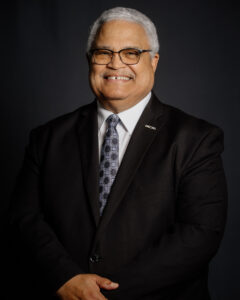
Chuck Dickerson is the founder, executive director, and conductor of the Inner City Youth Orchestra of Los Angeles, and a member of the League’s Board of Directors. Chuck’s remarkable 50-year career, spanning conducting, composition, civic leadership, and education, reflects a deep commitment to the transformative power of music. Learn more about his work, his vision, and what continues to inspire him.
I am honored to be a part of the lives of these young people. A few will go on to be professional musicians. But most will use the benefits they derive from participating in a youth orchestra to become leaders in our community and our society as a whole.
What inspired you to start the Inner City Youth Orchestra of Los Angeles (ICYOLA), and what does it mean to you to still be leading it today?
I founded ICYOLA in 2009. This is our 18th season. I started this orchestra when nine African-American high school instrumentalists asked me to help them start a youth orchestra in the neighborhood where they lived. There was no such program in the neighborhood, and in order to join a program, they would have to travel far away, play with others they did not know, likely pay tuition, and perhaps even compete for a seat in the orchestra. So we created this program so these kids wouldn’t have to travel far, so they could play with others in their neighborhood, so they wouldn’t have to pay, and so they wouldn’t have to compete for a seat. We now serve 300 youngsters, 200 of whom are in one of our four ensembles.
I am honored to be a part of the lives of these young people. A few will go on to be professional musicians. But most will use the benefits they derive from participating in a youth orchestra to become leaders in our community and our society as a whole. I have two biological offspring. But with this orchestra and those who have matriculated through our program, I now have literally thousands of children. Two of them became practicing doctors this year—the first time that has happened. Many more are either already employed, or will become employed, in careers that will allow them to lift their families out of poverty. It is great to make good music with these youngsters. It is better to help shape good lives.
ICYOLA serves young people from underrepresented communities in Los Angeles. How does being part of an orchestra shape a young person’s life beyond the music itself?
The habits that we form, the skills that we learn, and the disciplines that we hone as young orchestra musicians make us more than just experts in music performance; they uplift all aspects of our lives. The unyielding practice of excellence that we pursue when making music becomes the unyielding practice of excellence in all areas of life. And this is how orchestras shape the young people we serve.
Orchestras also teach civics. We learn that we all get better—both individually and collectively—when we work together. So we learn how to work together to achieve excellence. We learn how to support the leader when we’re playing a harmonic line, and to lead with strength when we’re playing the melody. There is no better preparation for life than in orchestra.
As a League Board member, how would you describe the League’s role in supporting organizations like ICYOLA and the broader ecosystem of orchestras across the country?
This summer, ICYOLA will take a tour across America to celebrate the 250th Anniversary of the Declaration of Independence. The tour is entitled “I, Too, Sing America” from the Langston Hughes poem of the Harlem Renaissance. We will perform music of composers who represent the broad diversity of our nation—like the music of the Lakota Tribes of the Black Hills of South Dakota. We learned about their music, and the orchestration of their music, by reaching out to the South Dakota Symphony Orchestra. We wouldn’t have even known that this orchestra existed but for the League of American Orchestras. The League opened a door of friendship and collaboration that we are experiencing with SDSO. This is one of many vital ways that the League serves orchestras throughout the country, and indeed, the greater society of America, because it adheres to the principle that music brings us all together.
What gives you the most hope when you think about the future of orchestral music?
At a time when our country is so very divided and there seems to be rancor around every corner, it is amazing to see how an orchestra can bring us together. There is no such thing as a “right” clarinet or a “left” trombone. And, we learn that when the clarinet and trombone sound together, jointly, they can make beauty. I hope that music—ensemble music, indeed, orchestra music—can be one of the catalysts that helps us heal as a nation and bring us together all around the world.
The habits that we form, the skills that we learn, and the disciplines that we hone as young orchestra musicians make us more than just experts in music performance; they uplift all aspects of our lives.
Related
-
Development & Fundraising
Planned Giving: The League Legacy Society
-
Governance
Governance

Become a member
Thank you for your interest in the League of American Orchestras! We are dedicated to advancing the orchestral experience for all.
Join Now